Emotional wellbeing is about how we think, feel, and cope with everyday experiences. It is normal for children, teens, and families to feel sad, worried, lonely, stressed, or overwhelmed, especially after moving to a new country. Many people may be coping with difficult or scary experiences from their past, separation from loved ones, or difficulty adjusting to their new environments. Some people have difficulty finding healthy ways to manage their stress, turning to drugs or alcohol to cope, or may feel so overwhelmed that they think about hurting themselves. These experiences can be difficult, but they do not mean something is wrong with you. Strong feelings and reactions are often natural responses to stress, loss, difficult experiences, and big life transitions.
There are many ways to support your wellbeing and feel more prepared to handle life’s challenges. Learning about your feelings, practicing coping and relaxation skills, and finding support when you need it can all help. With time, care, and support, healing and adjustment are possible.
The resources on these pages are here to help you and your family better understand your emotional wellness, cope with stress, and support your adjustment to life in the United States.
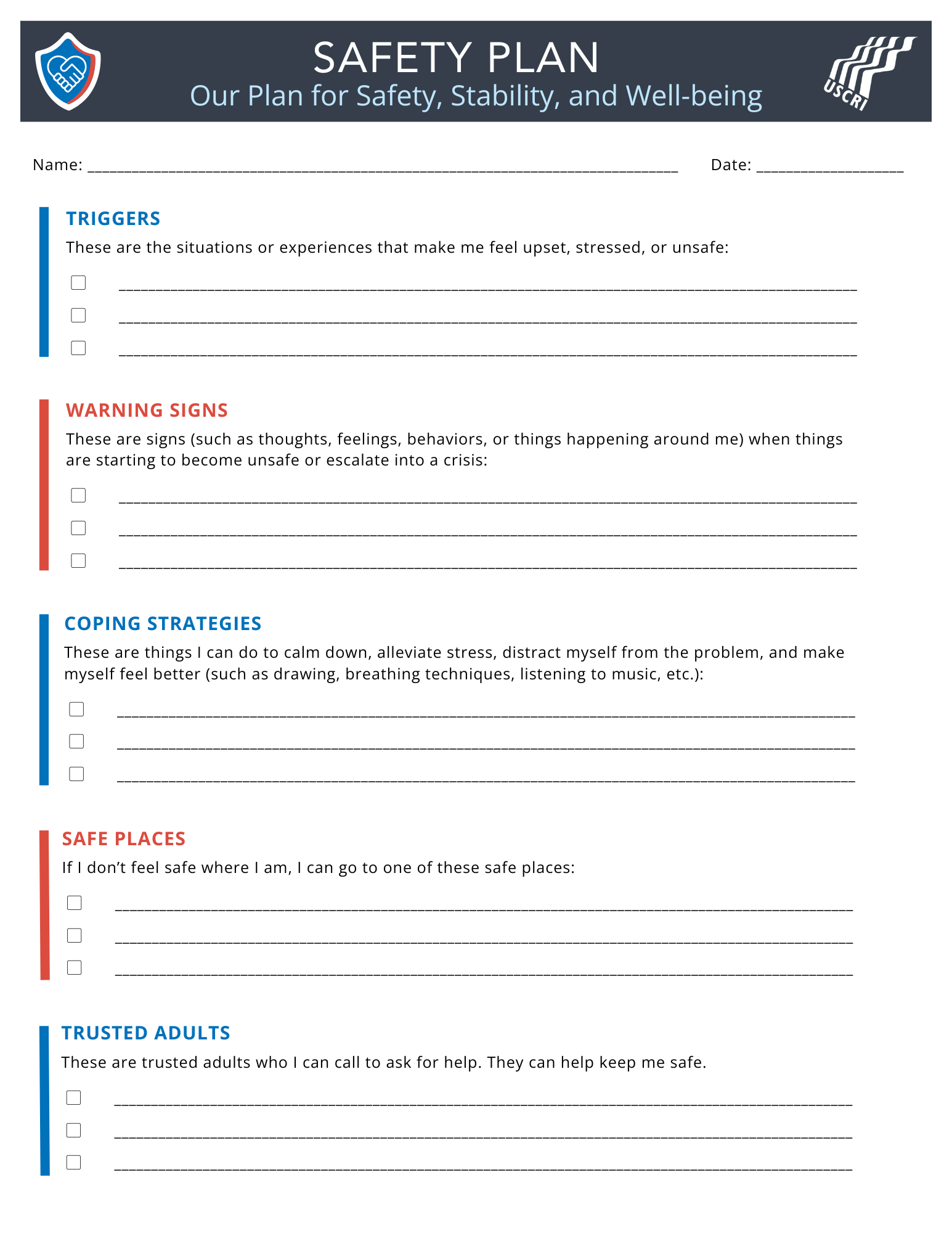
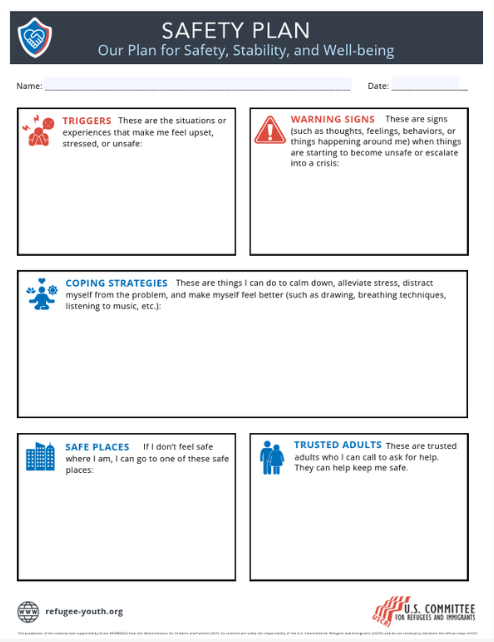
Description:This 3-page resource helps older children and teens create a personalized safety plan for coping with strong emotions, stress, or difficult situations. It guides youth in identifying warning signs, coping strategies, trusted sources of support, and steps they can take to stay safe and get help when needed.
Description: This resource helps older children and teens create a personalized safety plan for coping with strong emotions, stress, or difficult situations. It guides youth in identifying warning signs, coping strategies, trusted sources of support, and steps they can take to stay safe and get help when needed.
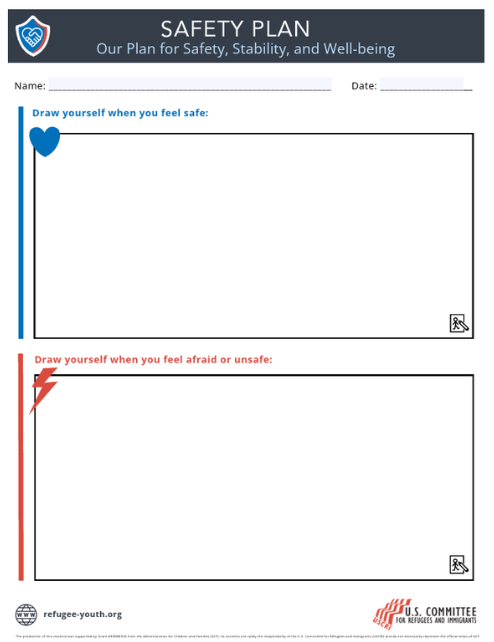
Description:This resource helps younger children and their caregivers create a simple, child-friendly safety plan for times when a child is feeling upset, overwhelmed, or unsafe. It guides families in identifying trusted adults, calming activities, and supportive steps that can help children cope with big feelings and stay safe.
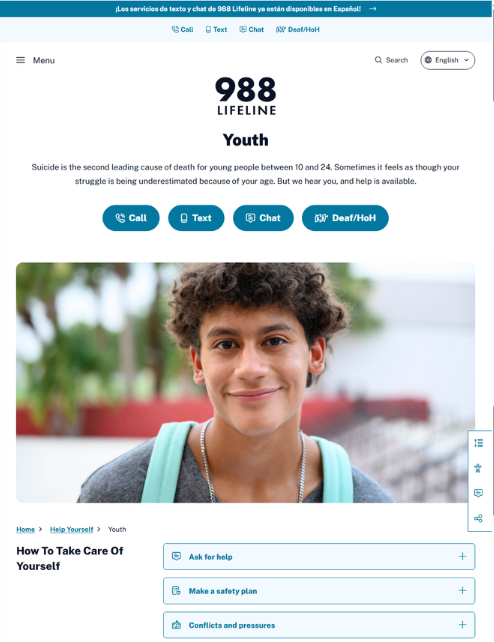
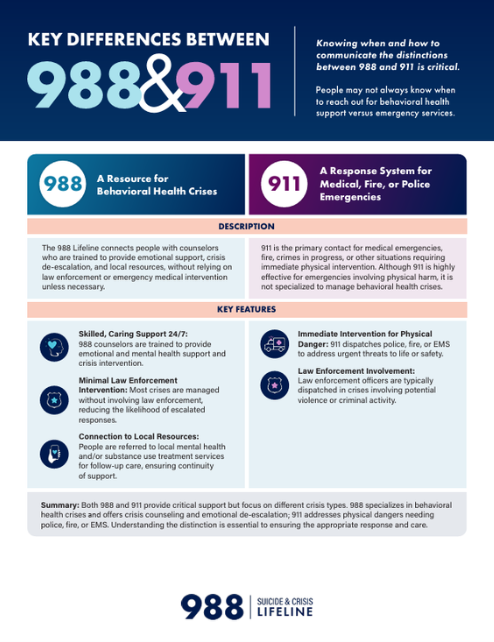
Description:This hotline and website are for youth, families, or service providers receive emotional support if feeling overwhelmed, stressed, hopeless, orin emotional distress. These services are free, confidential, and available 24 hours a day, with access to interpretation in over 240 languages.The webpage includes tips for youth on coping with challenges, building support networks, and creating safety plans.
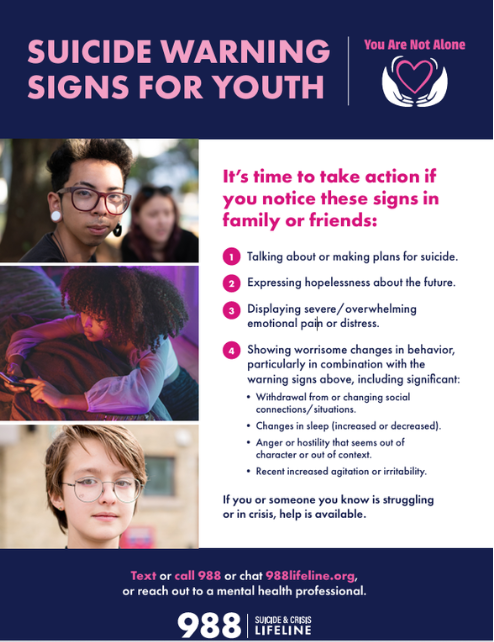
Description:This poster helps youth, families, and caregivers recognize common warning signs that a young person may be struggling with emotional distress or thoughts of suicide and explains when to seek help. It also provides information about the 988 Suicide & Crisis Lifeline, where free, confidential support is available 24/7.
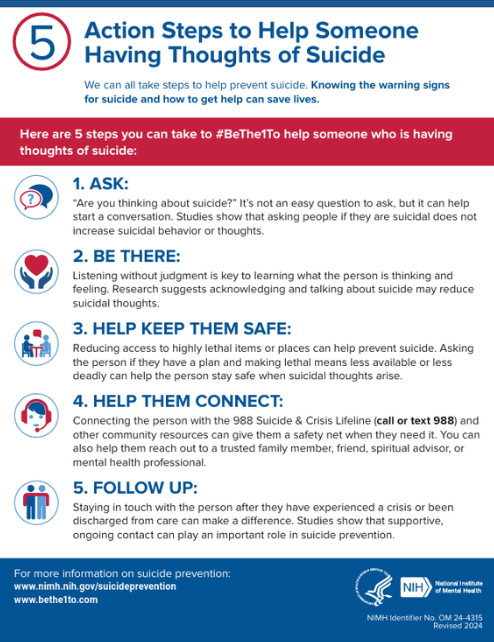
Description:This resource provides five practical steps for supporting someone who may be having thoughts of suicide, including how to start a conversation, listen with care, connect them to help, and stay involved. It is a helpful guide for family members, friends, and caregivers who want to know how to respond and support someone in crisis.