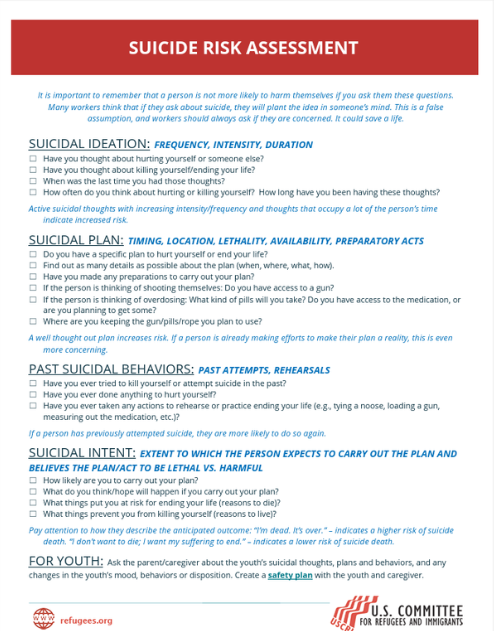
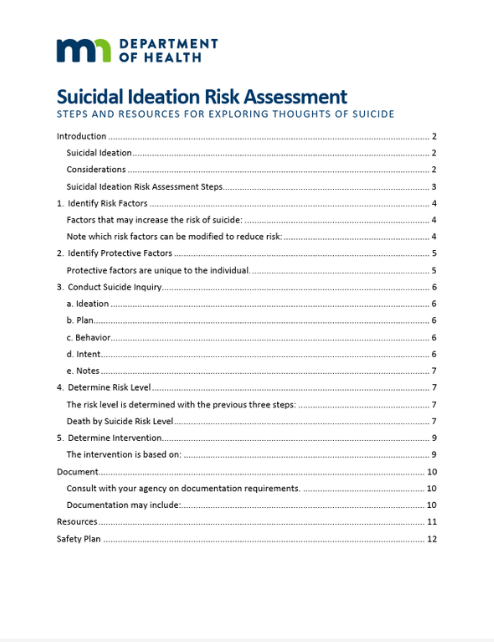
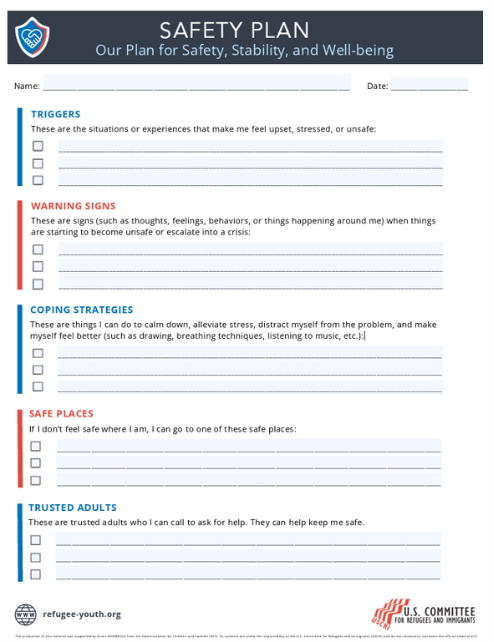
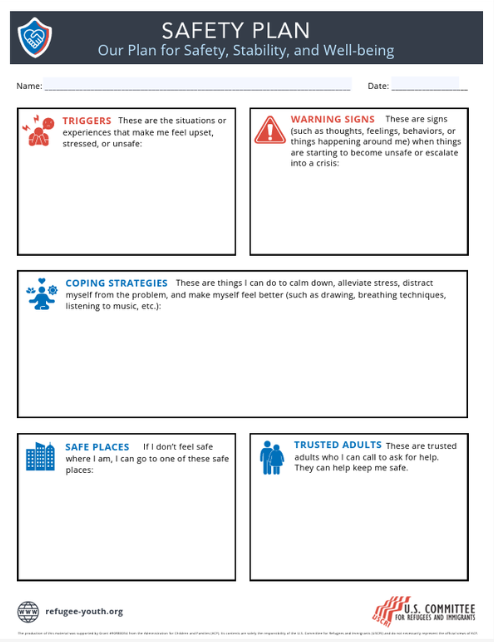
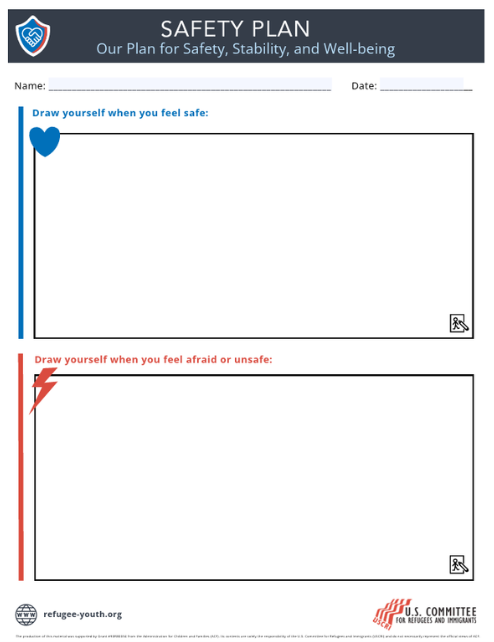
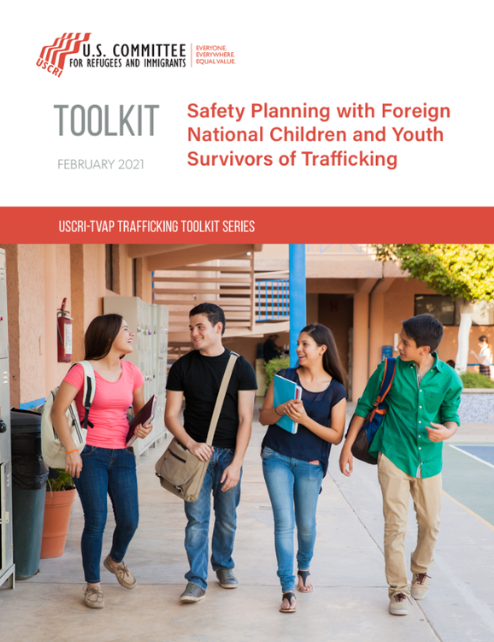
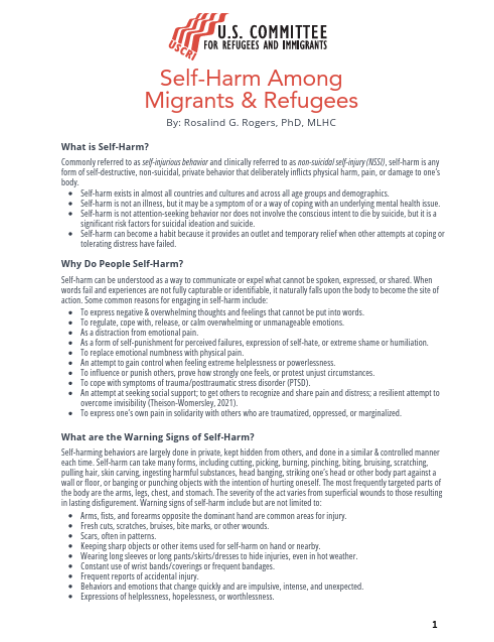
Refugee youth, like all young people, may experience periods of intense emotional distress. For some, challenges such as past trauma, ongoing stress during resettlement, family pressures, or feelings of isolation can contribute to thoughts about harming themselves or feeling overwhelmed. Service providers who work with refugee youth may be among the first people to notice when a young person is struggling or in crisis. Learning basic suicide prevention and crisis response skills can help providers respond calmly, ask supportive questions, and take appropriate steps to ensure the young person’s safety. Even providers who are not mental health specialists can play a key role by taking concerns seriously, following established safety protocols, and connecting youth and families with qualified professionals and emergency supports when needed.Many refugee children and youth have lived through traumatic events or prolonged stress that can feel overwhelming or frightening. These experiences can shape how they think, feel, behave, and relate to others. Trauma responses are frequently misunderstood as intentional misbehavior, defiance, or lack of motivation. Trauma-informed approaches help refugee-serving providers recognize how past experiences may be influencing newcomer youth’s current behaviors and respond with empathy and support. The resources below offer more information on trauma‑informed care and how it can help create safe environments, strengthen relationships with newcomer youth and families, and foster the resilience of refugee children and youth.
RESOURCES: Safety, Suicide Prevention, and Crisis Response
for Providers
Addressing the Mental Health of Refugee Children & Youth, Part III: Supporting Refugee Children Youth Experiencing Suicidal Ideation and Self-Harm
Addressing the Mental Health of Refugee Children & Youth, Part III: Supporting Refugee Children Youth Experiencing Suicidal Ideation and Self-Harm