Emotional wellbeing is about how we think, feel, and cope with everyday experiences. It is normal for children, teens, and families to feel sad, worried, lonely, stressed, or overwhelmed, especially after moving to a new country. Many people may be coping with difficult or scary experiences from their past, separation from loved ones, or difficulty adjusting to their new environments. Some people have difficulty finding healthy ways to manage their stress, turning to drugs or alcohol to cope, or may feel so overwhelmed that they think about hurting themselves. These experiences can be difficult, but they do not mean something is wrong with you. Strong feelings and reactions are often natural responses to stress, loss, difficult experiences, and big life transitions.
There are many ways to support your wellbeing and feel more prepared to handle life’s challenges. Learning about your feelings, practicing coping and relaxation skills, and finding support when you need it can all help. With time, care, and support, healing and adjustment are possible.
The resources on these pages are here to help you and your family better understand your emotional wellness, cope with stress, and support your adjustment to life in the United States.
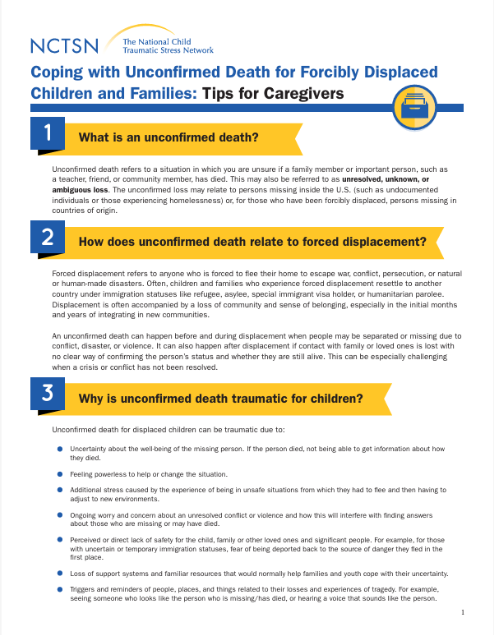
Description:This fact sheet offers information for caregivers on unconfirmed death, how it relates to forced displacement, how it is traumatic for children, and how children might respond. This fact sheet also provides information on how you can help a child cope with unconfirmed death and includes additional resources for caregivers.
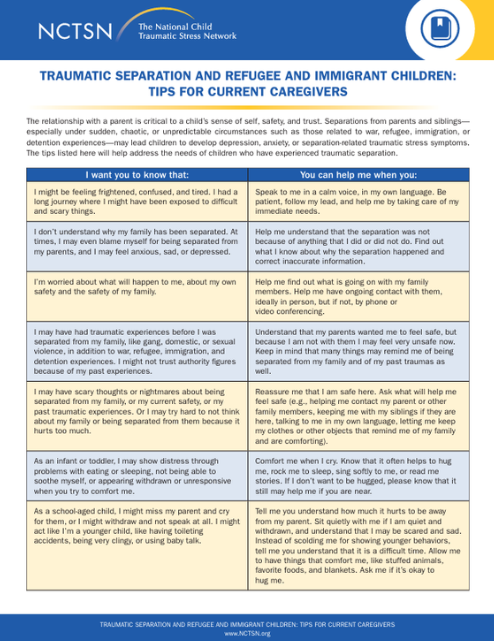
Description:This resource provides tips for current caregivers and providers to help address the needs of immigrant and refugee children who have experienced traumatic separation. This tipsheet discusses the impact of sudden, chaotic, or unpredictable separation from parents and siblings including depression, anxiety, or separation-related traumatic stress symptoms. It also outlines what children of different ages might be experiencing and how caregivers and others can help.
Childhood Traumatic Separation: Youth Information Sheet
Childhood Traumatic Separation: Youth Information Sheet
Resource Type: PDF
Source: National Child Traumatic Stress Network (NCTSN)
Languages: English
Description:This fact sheet provides information for youth about separation distress, when separation can be traumatic for children and youth, traumatic reactions to separation, and what to do to feel better.
Childhood Traumatic Grief: Youth Information Sheet
Childhood Traumatic Grief: Youth Information Sheet
Resource Type: PDF
Source: National Child Traumatic Stress Network (NCTSN)
Languages: English
Description:This fact sheet offers information for youth to help them understand the differences between grief and traumatic grief, the signs and symptoms of traumatic grief in children and youth, and what to do to feel better.
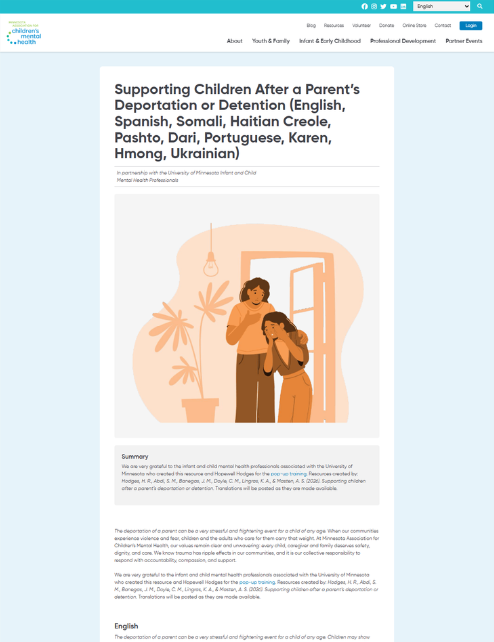
Description:This document was prepared by child mental health professionals, and it describes ways to support healthy development and resilience for children in this difficult situation. It is intended for children’s primary caregivers, along with other supportive adults, like teachers and neighbors.
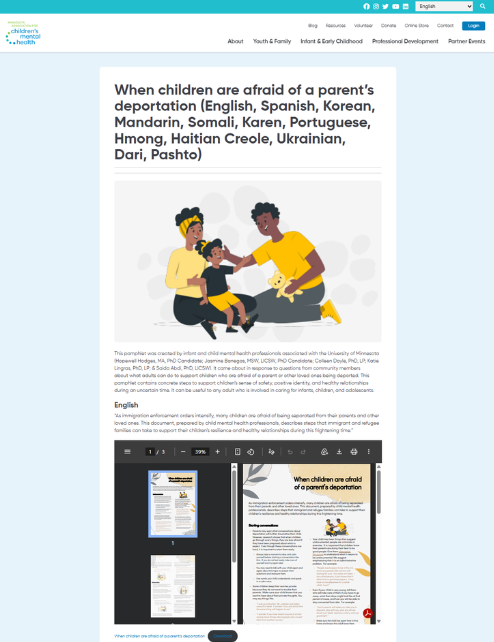
Description:This pamphlet contains concrete steps to support children’s sense of safety, positive identity, and healthy relationships during an uncertain time. It can be useful to any adult who is involved in caring for infants, children, and adolescents.
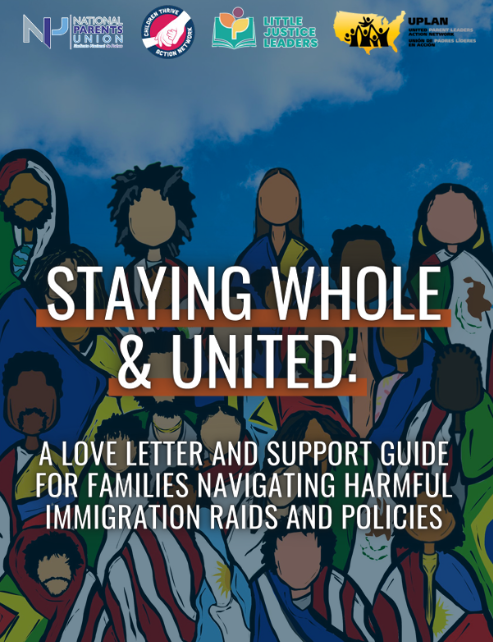
Description:This support guide centers the wisdom and experiences of families across the countryand responds to the fears and challenges many immigrant parents are facing today.The guide invites parents to reflect on their own well-being, offers ideas for talking with and supporting children during uncertain times, and includes guidance for safety planning. Families also share what helps them stay grounded and connected to culture and community, alongside mental health resources, book recommendations, and additionalsupports.