Emotional wellbeing is about how we think, feel, and cope with everyday experiences. It is normal for children, teens, and families to feel sad, worried, lonely, stressed, or overwhelmed, especially after moving to a new country. Many people may be coping with difficult or scary experiences from their past, separation from loved ones, or difficulty adjusting to their new environments. Some people have difficulty finding healthy ways to manage their stress, turning to drugs or alcohol to cope, or may feel so overwhelmed that they think about hurting themselves. These experiences can be difficult, but they do not mean something is wrong with you. Strong feelings and reactions are often natural responses to stress, loss, difficult experiences, and big life transitions.
There are many ways to support your wellbeing and feel more prepared to handle life’s challenges. Learning about your feelings, practicing coping and relaxation skills, and finding support when you need it can all help. With time, care, and support, healing and adjustment are possible.
The resources on these pages are here to help you and your family better understand your emotional wellness, cope with stress, and support your adjustment to life in the United States.
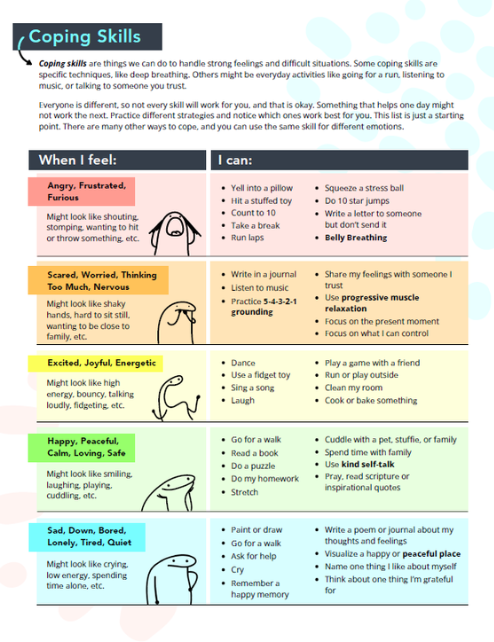
Description:This resource helps children and youth identifyand understand their emotions while learning practical coping skills for managing stress and difficult feelings. Families can use these simple strategies to support emotional well-being, build resilience, and strengthen healthy ways of responding to everyday challenges.
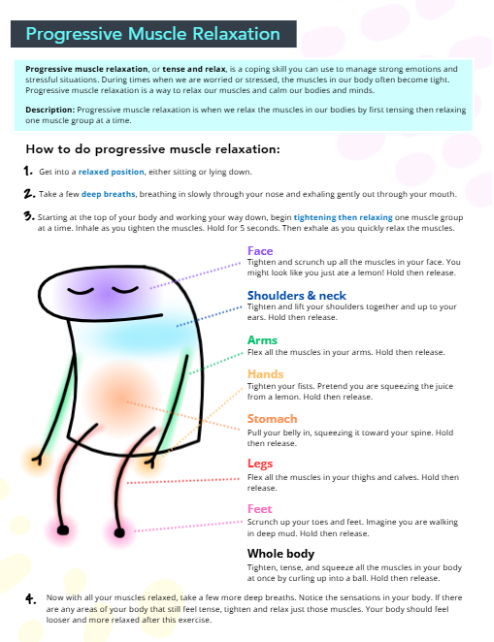
Description:This resource helps children and youth learn the coping skill, progressive muscle relaxation, to manage strong emotions and stressful situations. Step-by-step instructions and tips for different age groups are available.
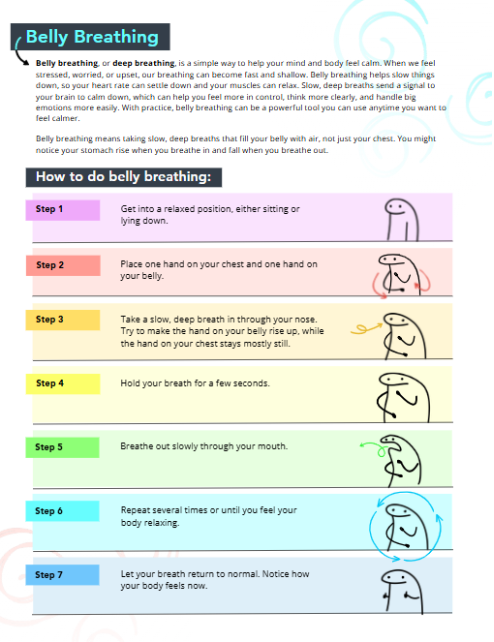
Description:This resource teaches children, youth, and families how to use belly breathing, a simple coping technique that can help reduce stress, anxiety, and strong emotions. It provides easy-to-follow steps and tips for different ages.
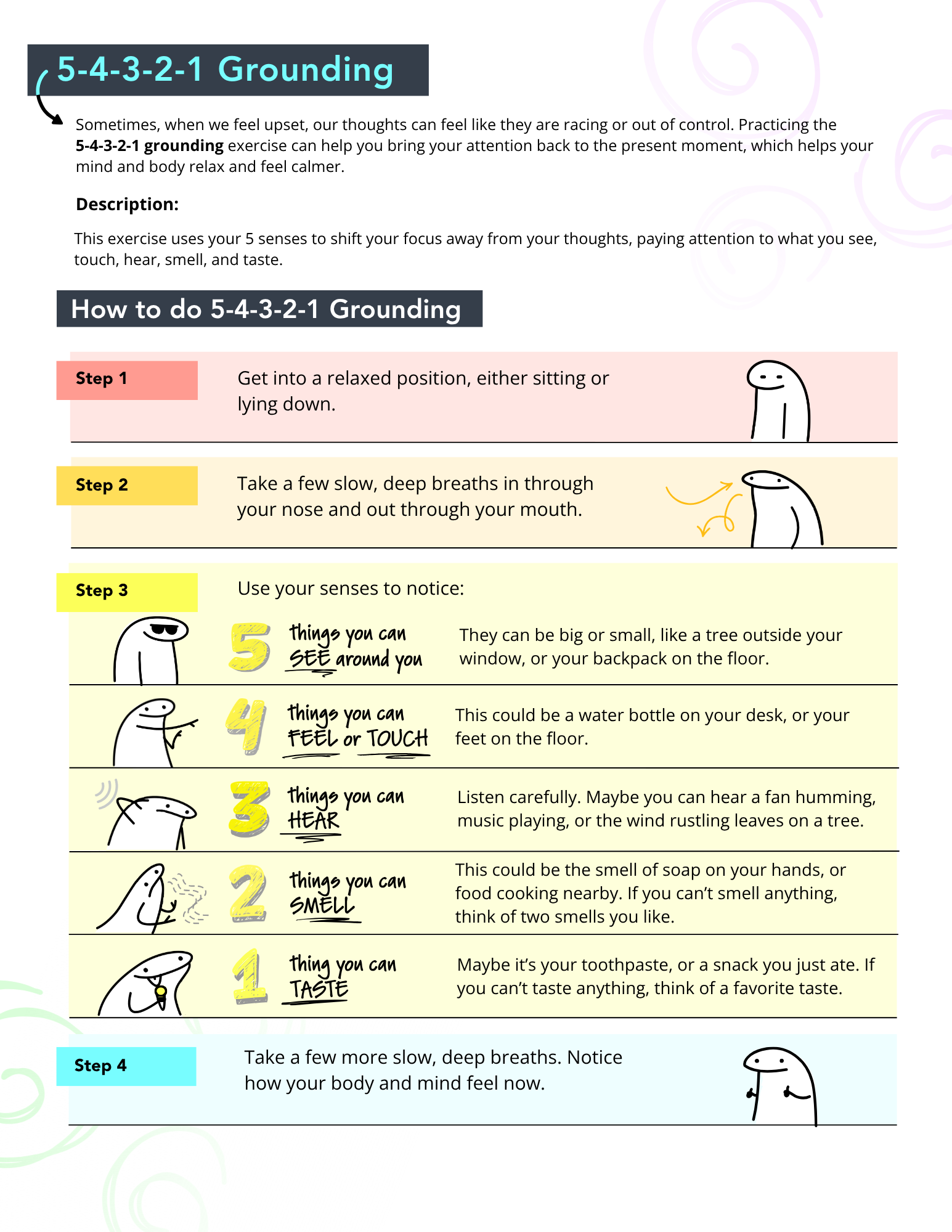
Description:This resource introduces the 5-4-3-2-1 grounding technique, a simple coping tool that helps children and youth feel more calm, focused, and connected to the present moment when they are feeling stressed, anxious, or overwhelmed.
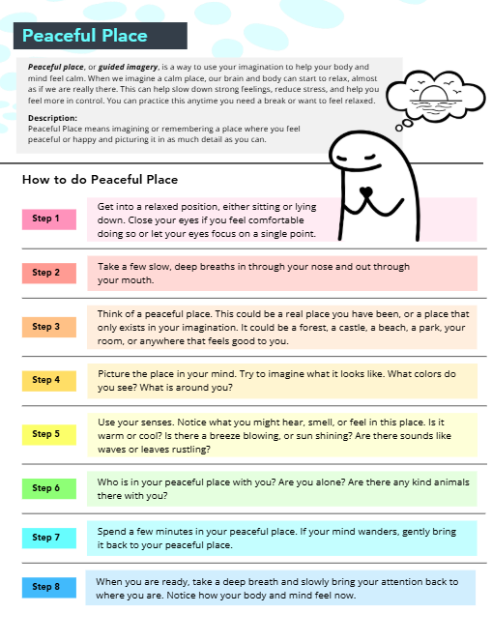
Description:This resource guides children and youth through a calming visualization exercise that helps them imagine a safe and peaceful place when they are feeling stressed, worried, or overwhelmed. Families can use this tool to support relaxation, emotional regulation, and a greater sense of comfort and security.
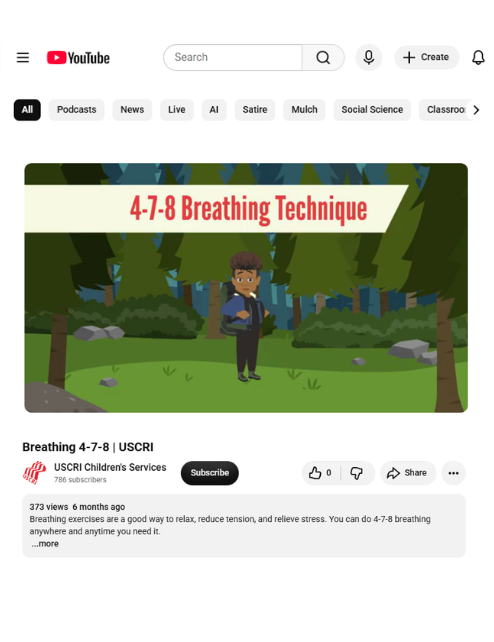
Description:This short video teaches the 4-7-8 breathing technique, a simple tool that can help youth and families relax, reduce tension, and manage stress. This coping strategy can be used anytime and anywhere when feeling overwhelmed or anxious.
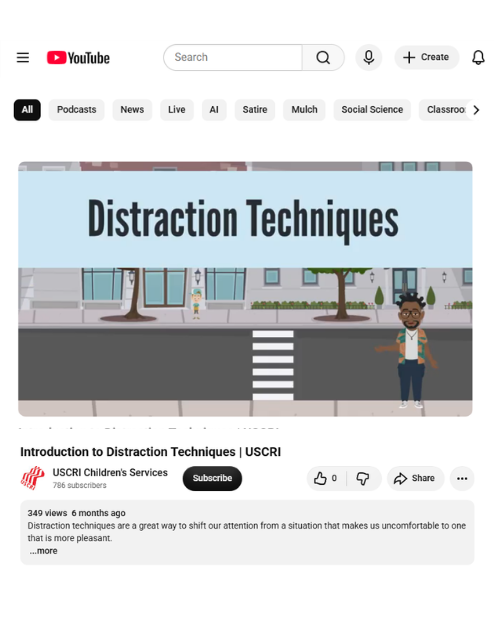
Description:This video introduces healthy distraction techniques that can help people shift their attention away from stressful or uncomfortable situations. It offers practical coping skills for managing difficult emotions and building emotional well-being.
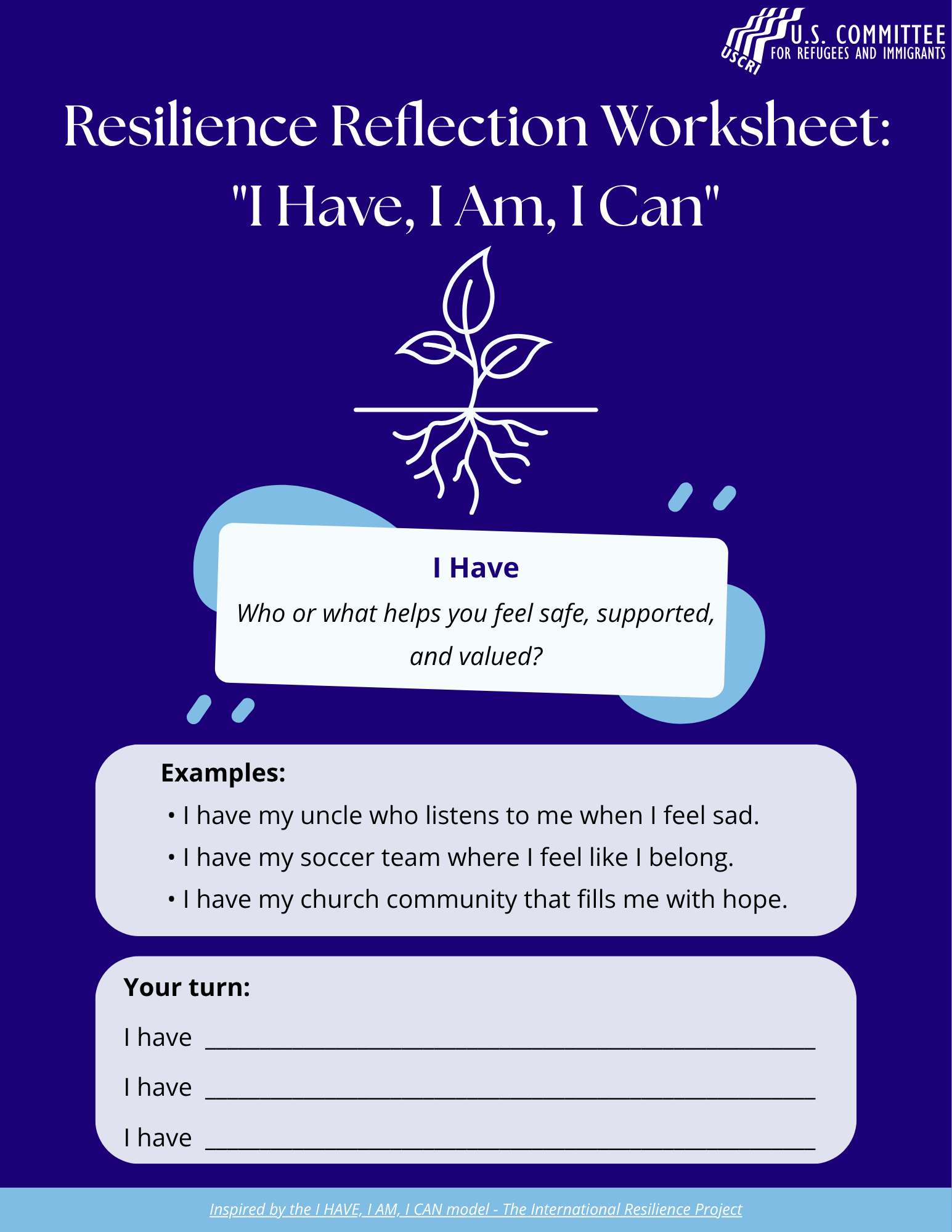
Description:This reflection worksheet helps children and youth recognize their strengths, supportive relationships, and personal skills through the “I Have, I Am, I Can” framework. Families can use this activity to build resilience, boost confidence, and encourage positive self-reflection during challenging times.