Emotional wellbeing is about how we think, feel, and cope with everyday experiences. It is normal for children, teens, and families to feel sad, worried, lonely, stressed, or overwhelmed, especially after moving to a new country. Many people may be coping with difficult or scary experiences from their past, separation from loved ones, or difficulty adjusting to their new environments. Some people have difficulty finding healthy ways to manage their stress, turning to drugs or alcohol to cope, or may feel so overwhelmed that they think about hurting themselves. These experiences can be difficult, but they do not mean something is wrong with you. Strong feelings and reactions are often natural responses to stress, loss, difficult experiences, and big life transitions.
There are many ways to support your wellbeing and feel more prepared to handle life’s challenges. Learning about your feelings, practicing coping and relaxation skills, and finding support when you need it can all help. With time, care, and support, healing and adjustment are possible.
The resources on these pages are here to help you and your family better understand your emotional wellness, cope with stress, and support your adjustment to life in the United States.
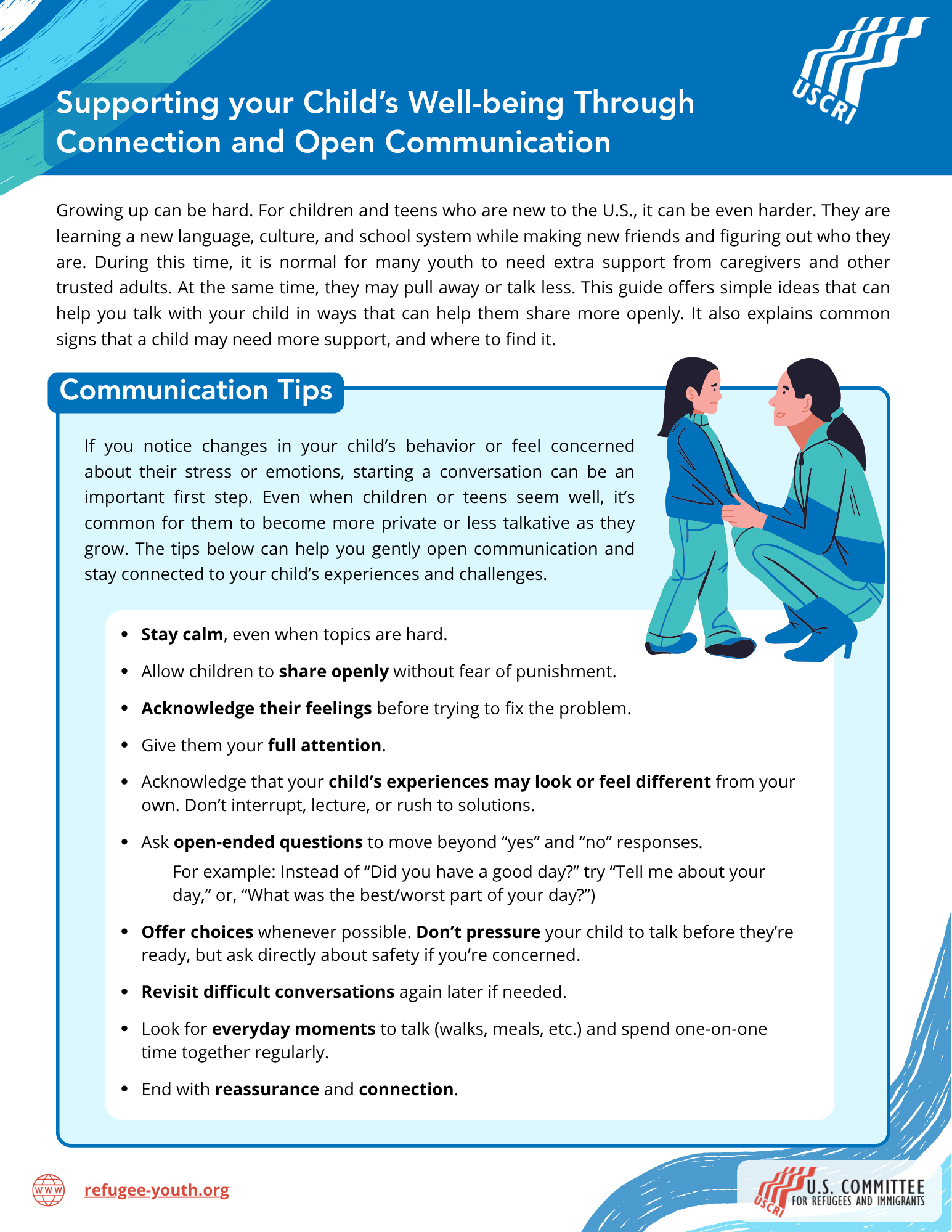
Description:This handout offers practical tips for caregivers on strengthening their children’s emotional well-being through supportive relationships and open communication. This handout highlights communication tips, signs of emotional distress in newcomer children and where to seek additional help if needed.
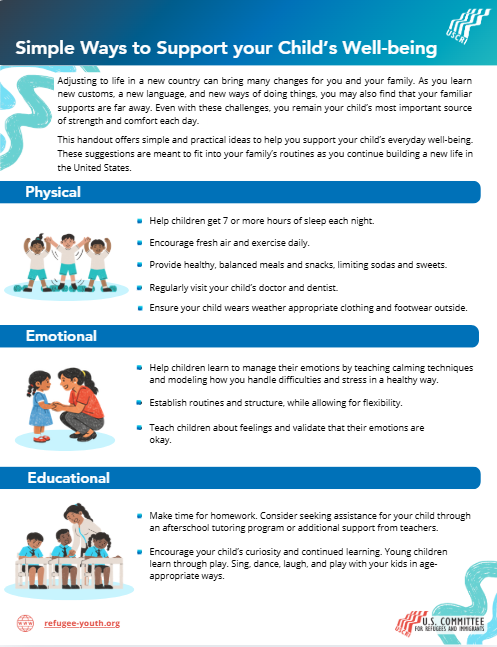
Description:This handout provides newcomer caregivers with practical, everyday strategies to help promote their children’s emotional well-being during resettlement.
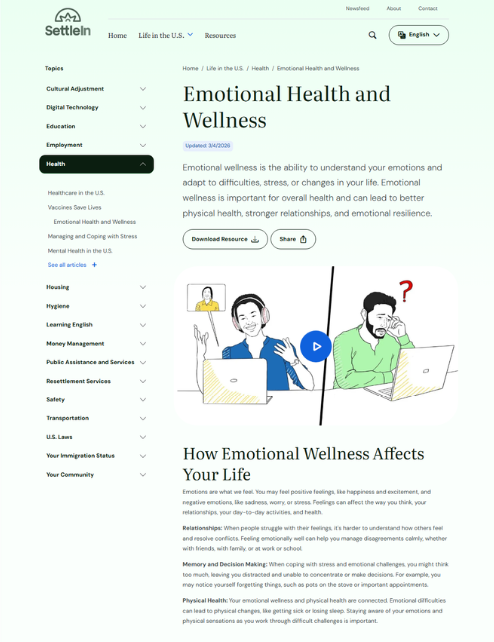
Description:This website includes a handout and video explaining emotional health and wellness, including how emotions can affect relationships, decision-making, and physical health. It also shares practical tips for managing stress, building emotional resilience, and finding professional support when needed.
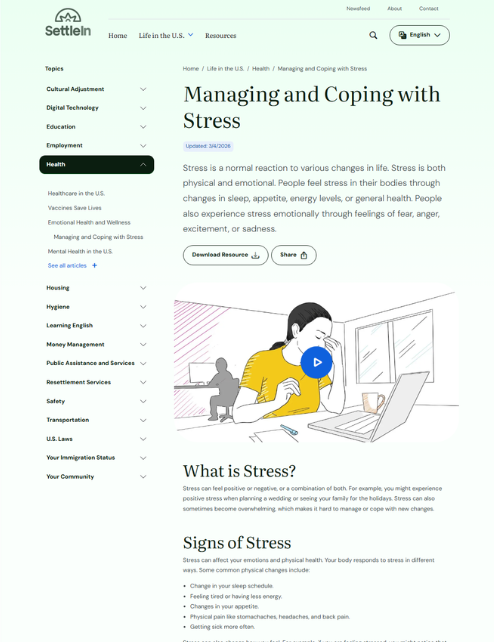
Description:This website includes a handout and video explaining what stress is, how it can affect your emotions and physical health, and how to recognize common signs of stress. It also provides practical coping strategies, such as building routines, getting enough sleep, staying active, and connecting with culture and community to support overall well-being.
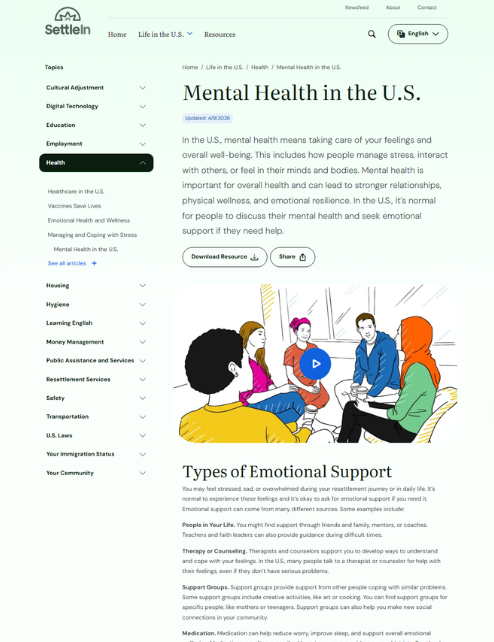
Description:This website includes a handout and videohelping newcomers understand mental health in the United States and highlighting the importance of seeking support when needed. It explains different types of emotional support services, including counseling, support groups, and medication, and offers guidance on finding a provider that meets your needs.
Languages: Website available in English, Dari, and Pashto
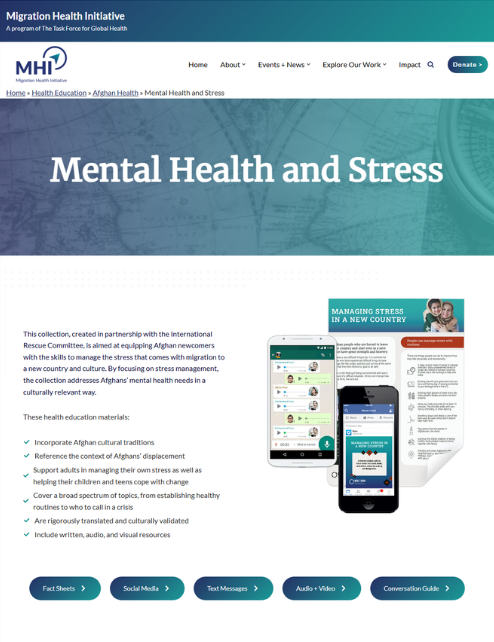
Description:This collection provides culturally relevant mental health and stress-management resources designed specifically for Afghan newcomers adjusting to life in a new country. It includes written, audio, and visual materials that help adults, youth, and families cope with change, build healthy routines, and access support during difficult times.
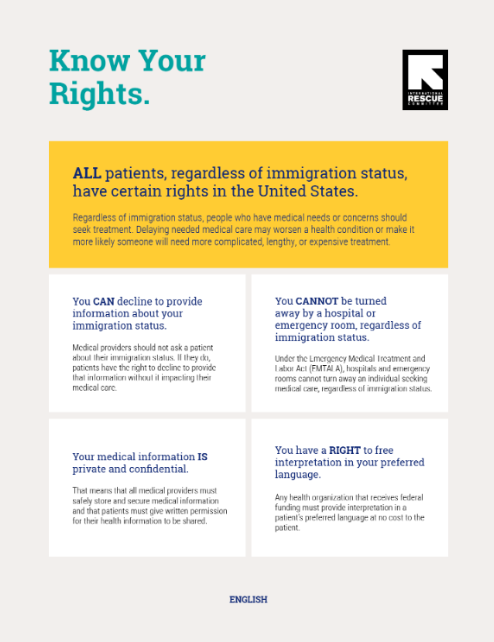
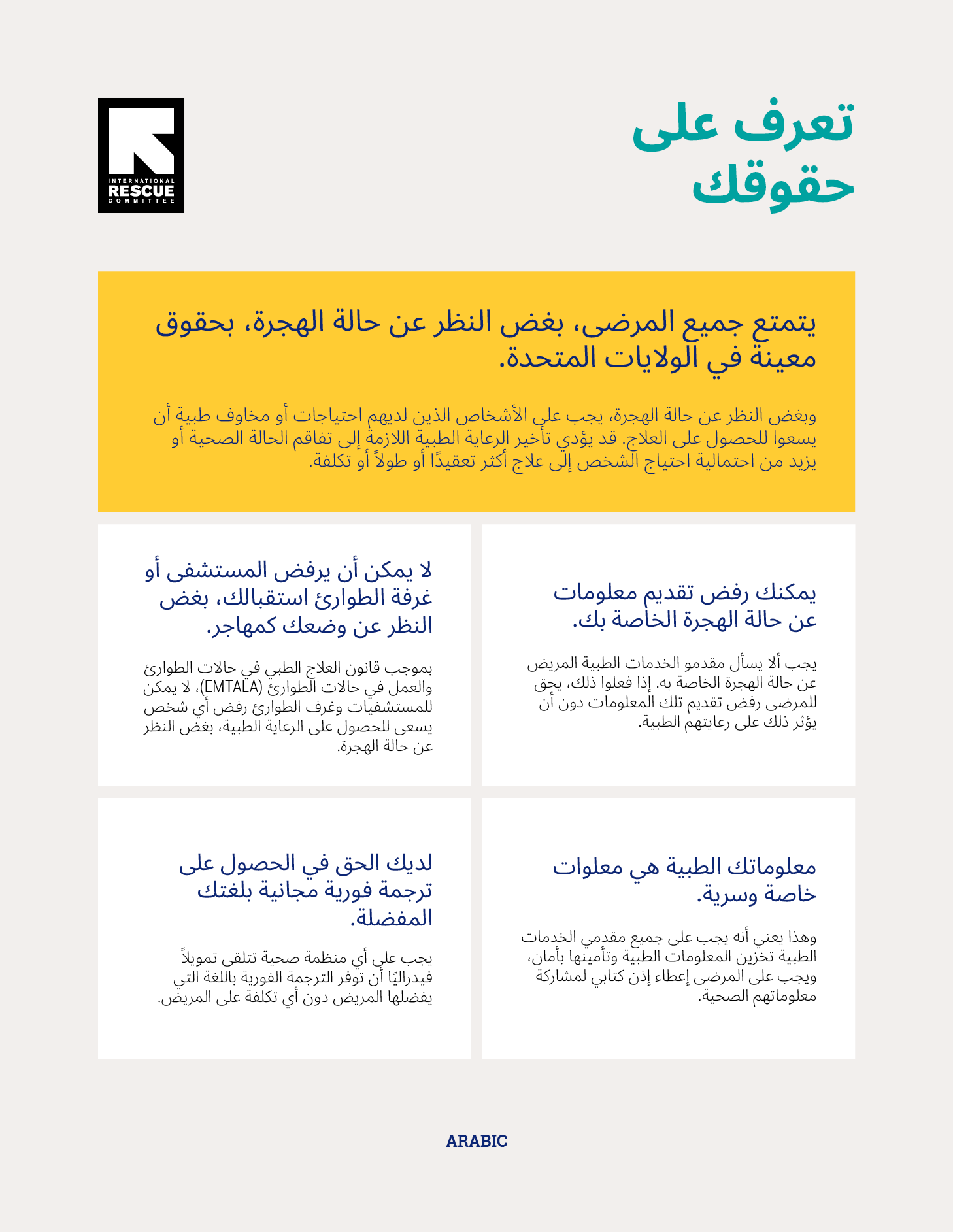
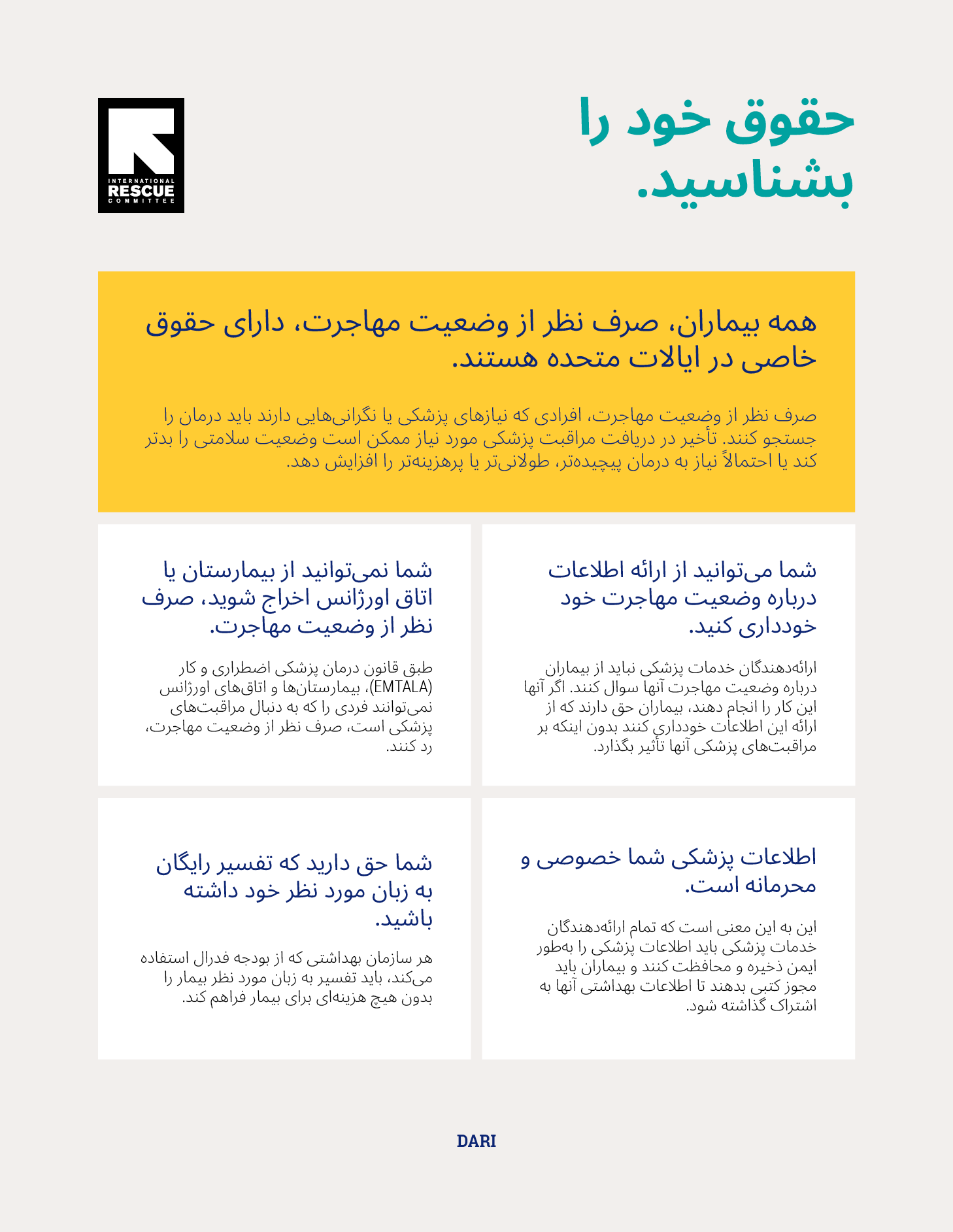
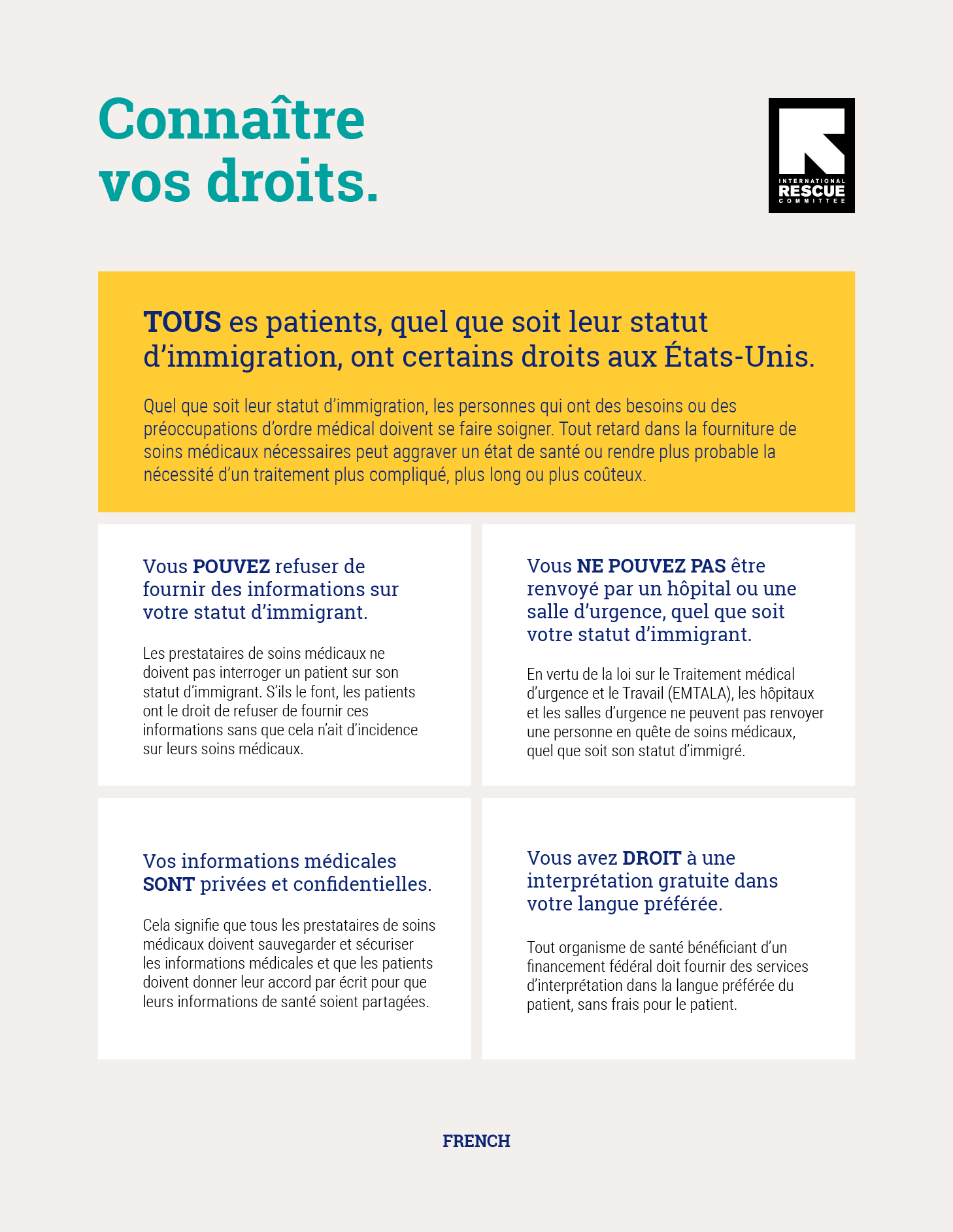
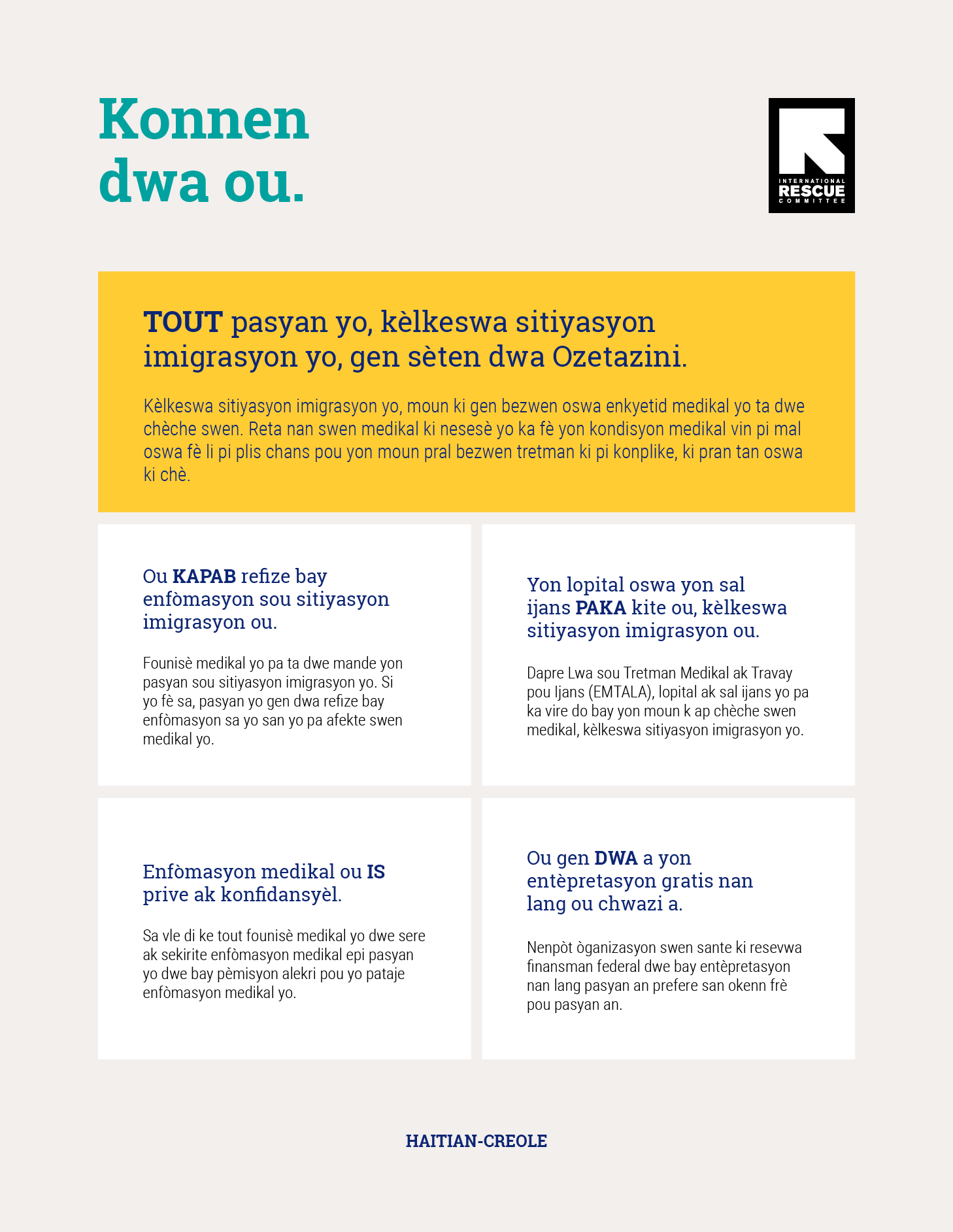
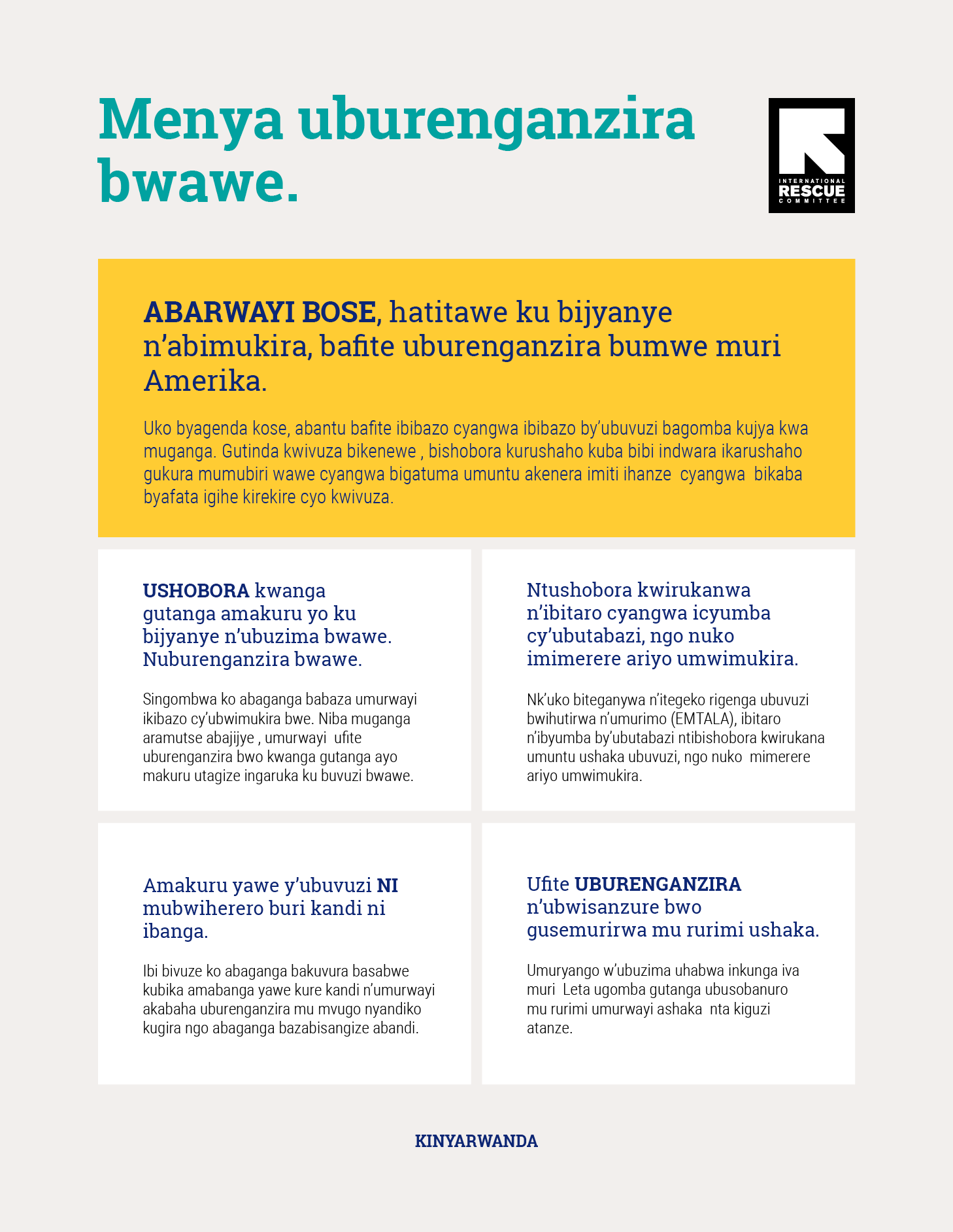
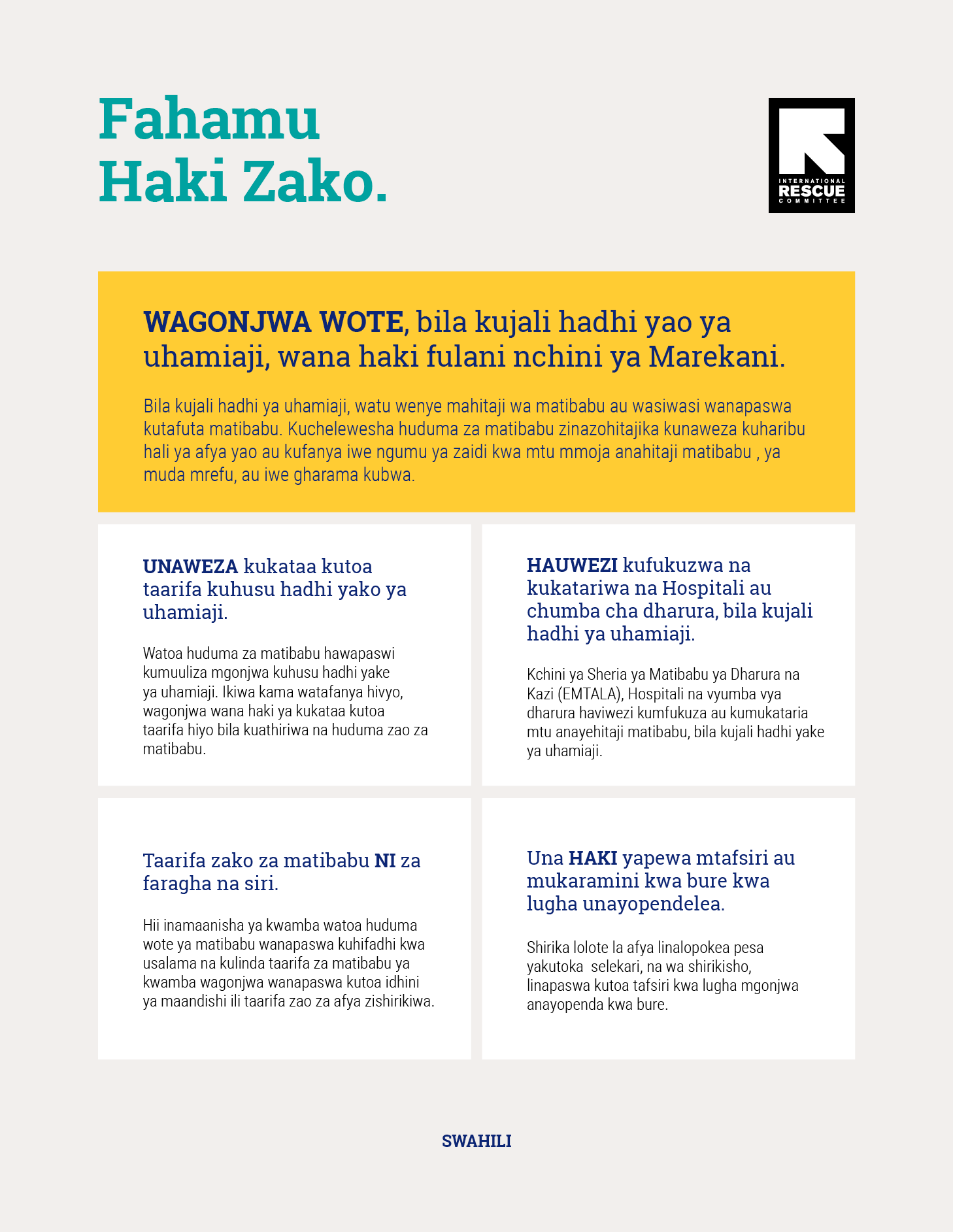
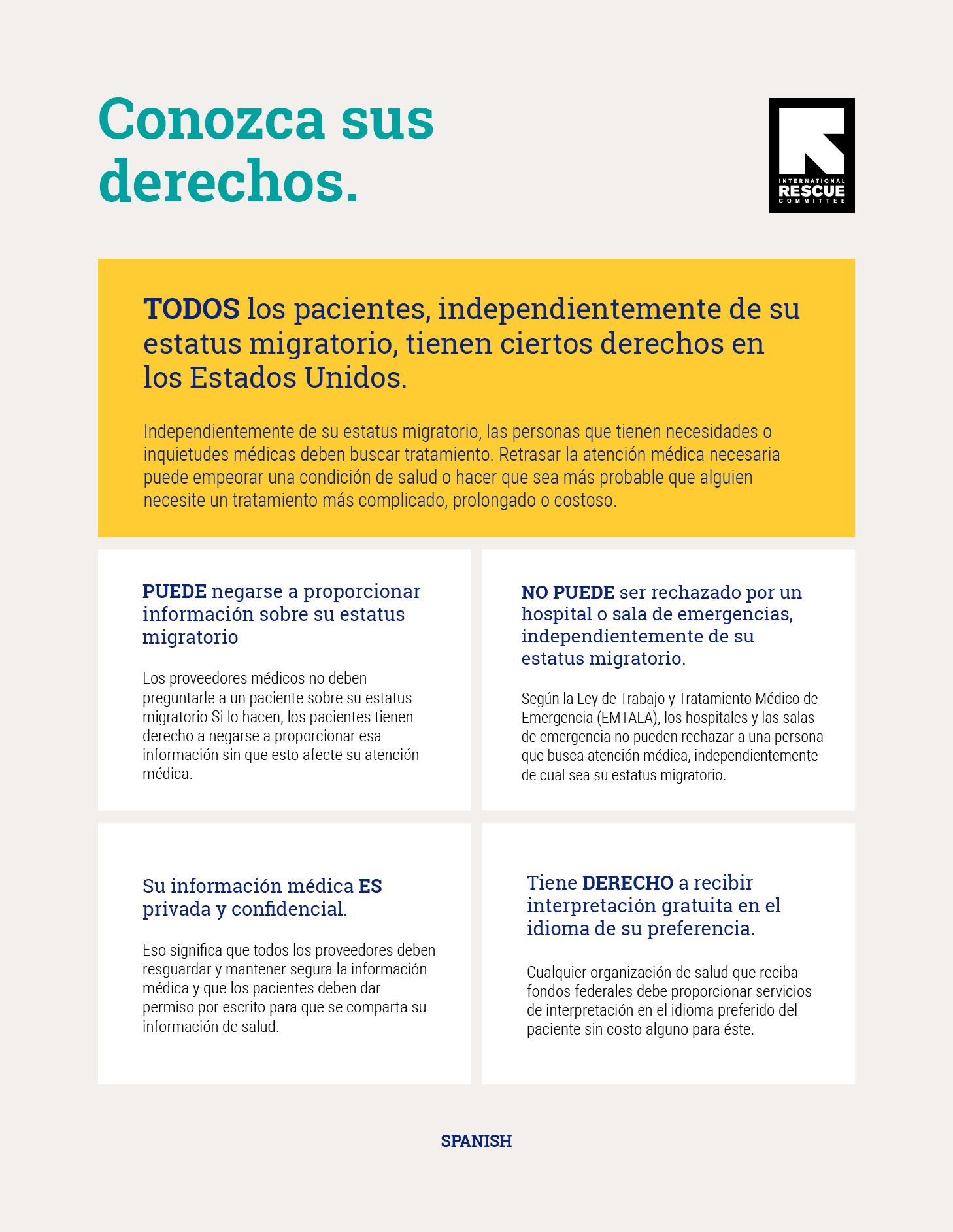
Description:This handout explains patient rights in hospital settings, regardless of immigration status, and helps individuals understand what protections they have when seeking medical care. Available in multiple languages, it is especially useful for newcomers and families navigating healthcare services in the United States.