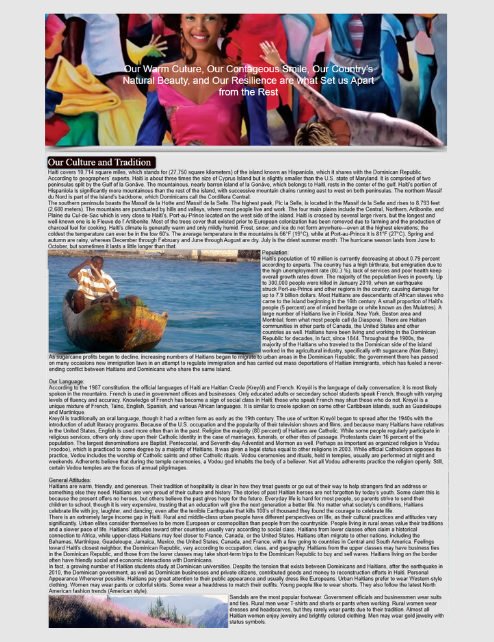
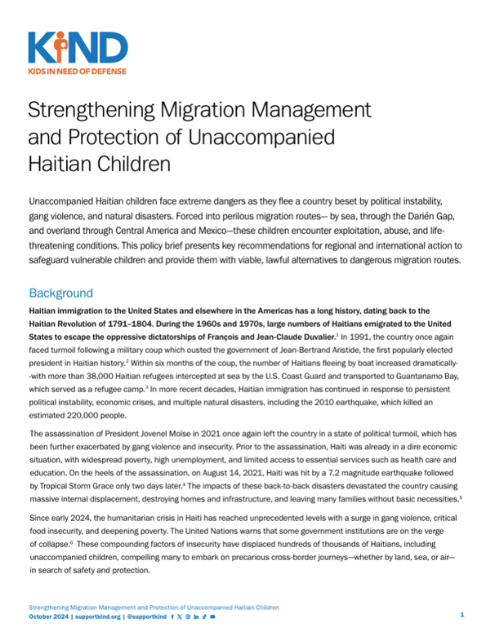
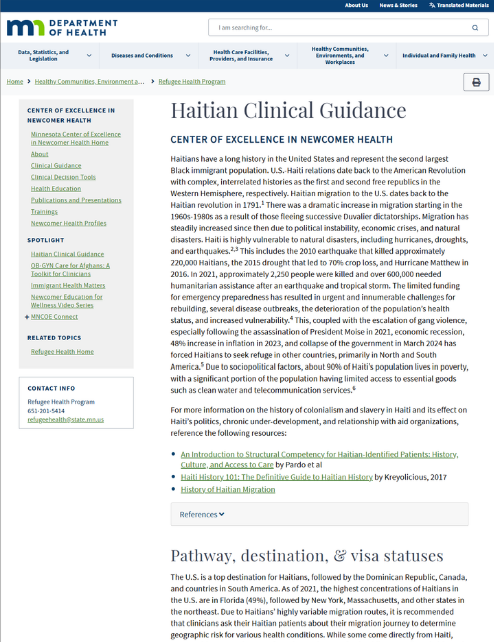
Haiti became the world’s first Black-led republic when it declared independence from the French in 1804. Through the years, Haiti has faced decades of political corruption, natural disasters, instability, and poverty. In 1990, the small island nation saw its first free and fair election, only to be followed by political coups and international interventions. In 2010, Haiti faced a devastating earthquake, leaving at least 1.3 million people displaced. Since then, recurring natural disasters, political crisis, and escalating gang violence have contributed to ongoing humanitarian needs and displacement. In recent years, gangs have gained control over large portions of Haiti’s capital, Port-au-Prince, forcing many children and families to flee their homes in search of safety.
While in the last decade only around 3,000 Haitians have arrived in the U.S. through asylum or the U.S. Refugee Admission Program, continued instability and violence have led many to seek safety elsewhere. Between October 2022 and the beginning of 2025, over 211,000 Haitians were approved to travel to the U.S. through a humanitarian parole process that required support from a U.S. based sponsor.
Additional resources for providers supporting Haitian children and youth are below.
RESOURCES: Haiti
for Providers
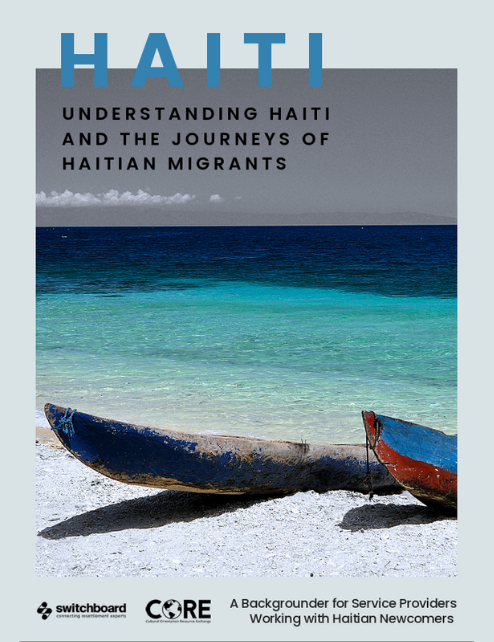
Haiti - Understanding Haiti and the Journey of Haitian Migrants
Haiti - Understanding Haiti and the Journey of Haitian Migrants