Best Practices and Safety Planning with Survivors of Domestic Violence
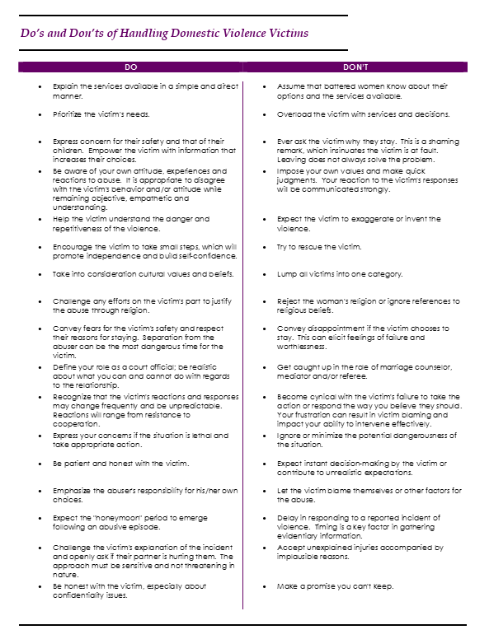
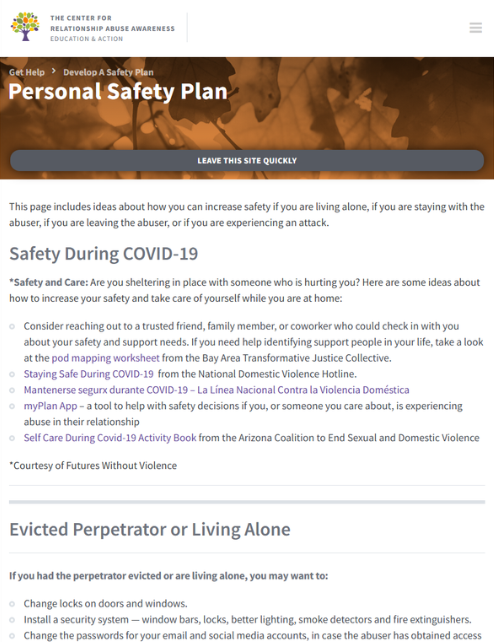
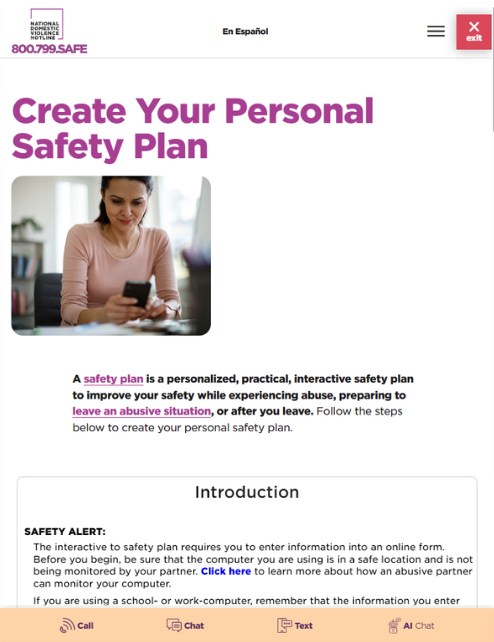
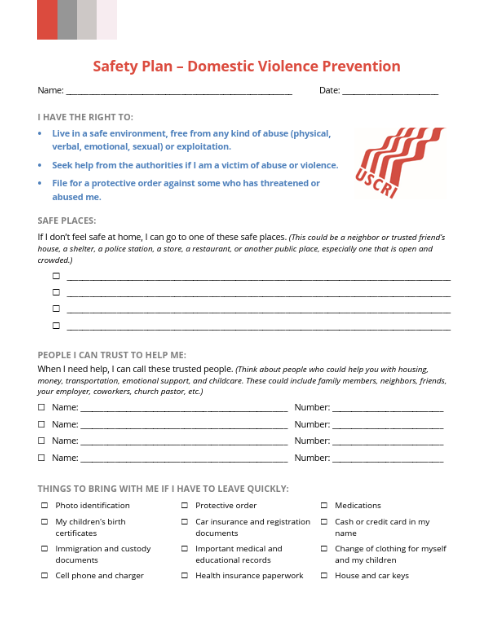
Providers working with refugee and newcomer survivors of domestic violence should use trauma-informed, client-centered approaches that respect survivors’ autonomy and cultural backgrounds. Safety planning is a key component of supporting survivors, as it can help to identify risks, plan for their safety, and connect with appropriate resources. The resources below offer guidance on best practices and safety planning tools when working with refugee and newcomer survivors of domestic violence.
RESOURCES: Best Practices and Safety Planning with Survivors of Domestic Violence
for Providers
Trauma-Informed and Client-Centered Best Practices:
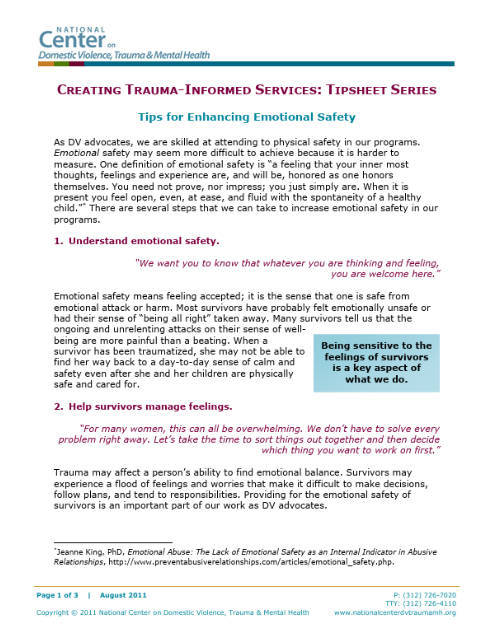
Creating Trauma-Informed Services – Tipsheet Series
Creating Trauma-Informed Services – Tipsheet Series
Resource Type: PDF
Source: National Center on Domestic Violence, Trauma & Mental Health (NCDVTMH)