Trauma & Trauma-Informed Care
Many refugee children and youth have lived through traumatic events or prolonged stress that can feel overwhelming or frightening. These experiences can shape how they think, feel, behave, and relate to others. Trauma responses are frequently misunderstood as intentional misbehavior, defiance, or lack of motivation. Trauma-informed approaches help refugee-serving providers recognize how past experiences may be influencing newcomer youth’s current behaviors and respond with empathy and support. The resources below offer more information on trauma‑informed care and how it can help create safe environments, strengthen relationships with newcomer youth and families, and foster the resilience of refugee children and youth.
RESOURCES: Trauma & Trauma-Informed Care
for Providers
Understanding Childhood Trauma
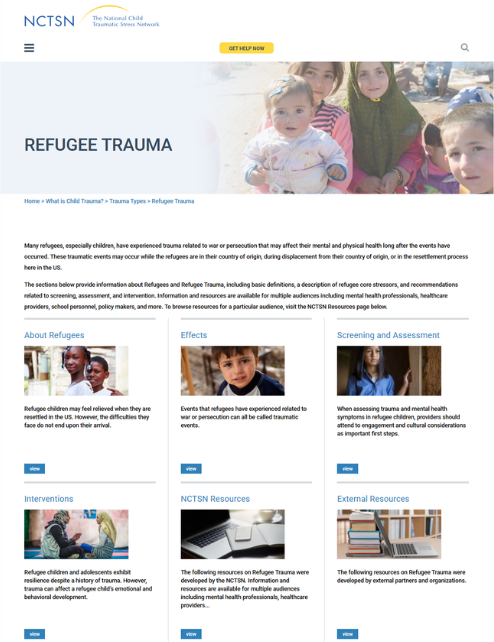
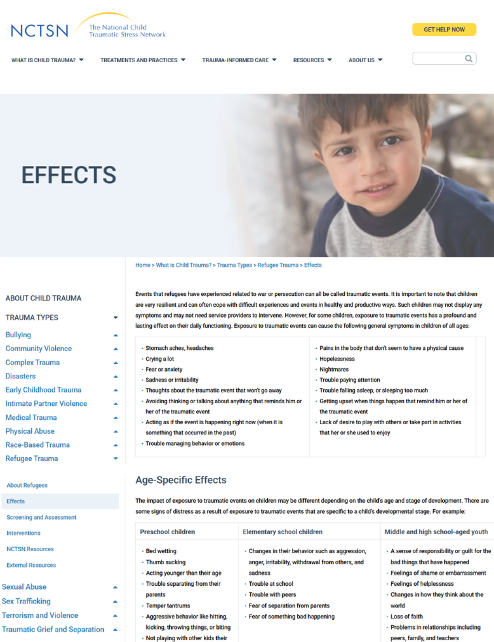
Refugee Trauma: Effects
Resource Type: Website
Source: National Child Traumatic Stress Network (NCTSN)
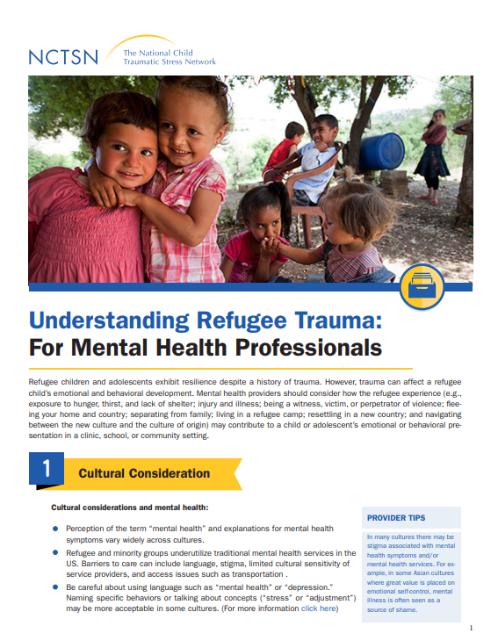
Understanding Refugee Trauma: For Mental Health Professionals
Resource Type: Fact Sheet
Source: National Child Traumatic Stress Network (NCTSN)
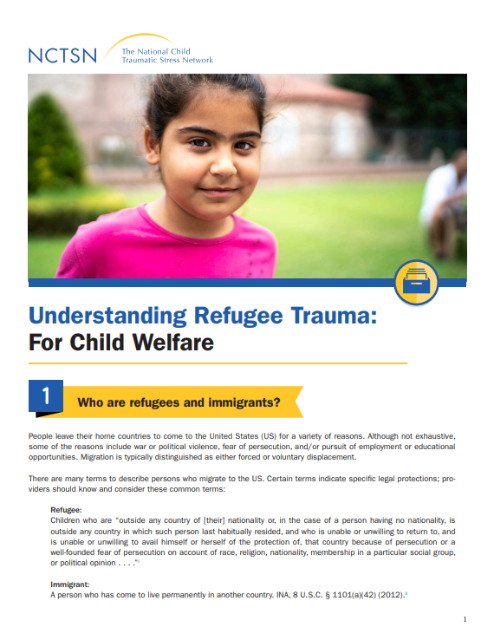
Understanding Refugee Trauma: For Child Welfare
Resource Type: Fact Sheet
Source: National Child Traumatic Stress Network (NCTSN)
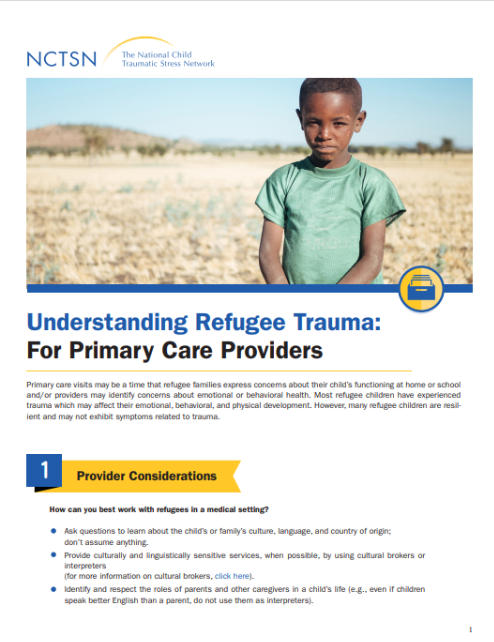
Understanding Refugee Trauma: For Primary Care Providers
Resource Type: Fact Sheet
Source: National Child Traumatic Stress Network (NCTSN)
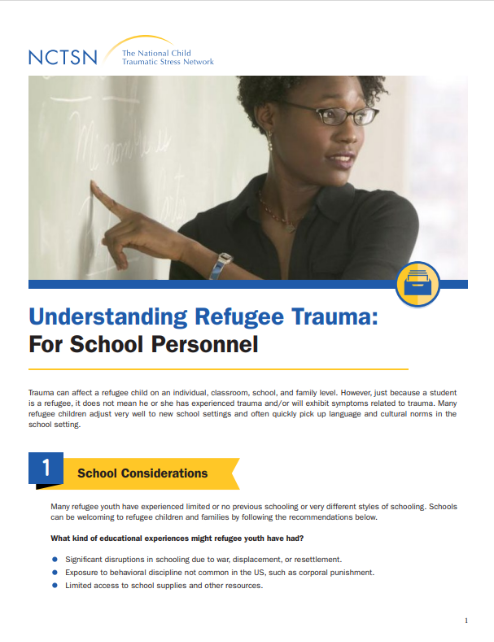
Understanding Refugee Trauma: For School Personnel
Resource Type: Fact Sheet
Source: National Child Traumatic Stress Network (NCTSN)
Trauma-Informed Care
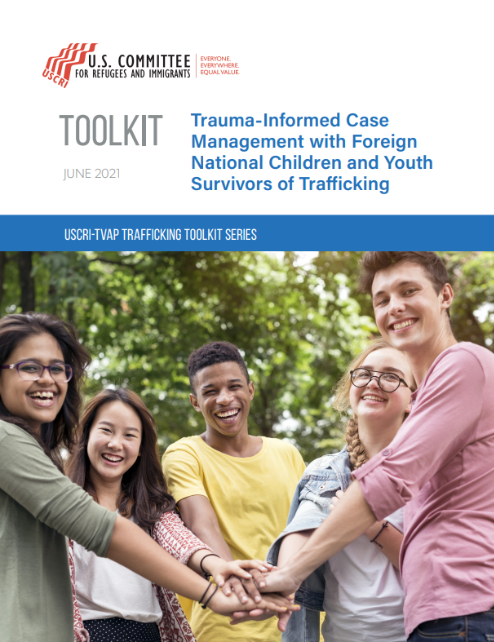
Trauma-Informed Case Management with Foreign National Children and Youth Survivors of Trafficking
Resource Type: Toolkit
Source: USCRI
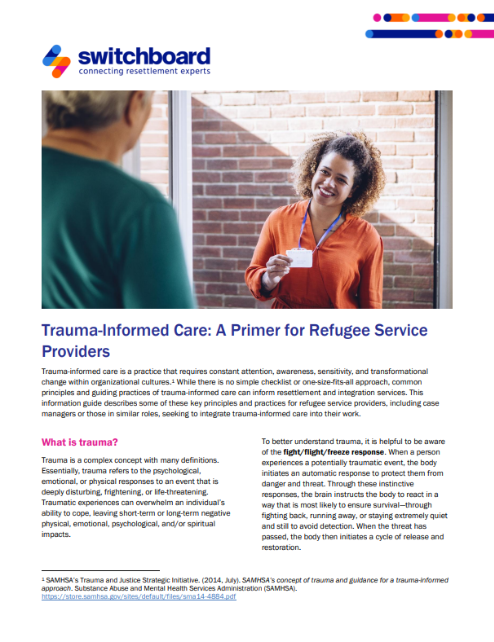
Trauma-Informed Care: A Primer for Refugee Service Providers
Resource Type: Guide
Source: Switchboard
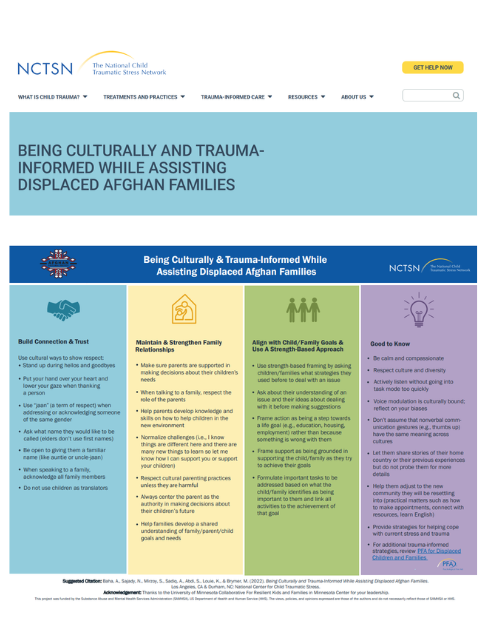
Being Culturally and Trauma-Informed While Assisting Displaced Afghan Families
Resource Type: Tip Sheet
Source: National Child Traumatic Stress Network (NCTSN)